Cart
0
You may also like


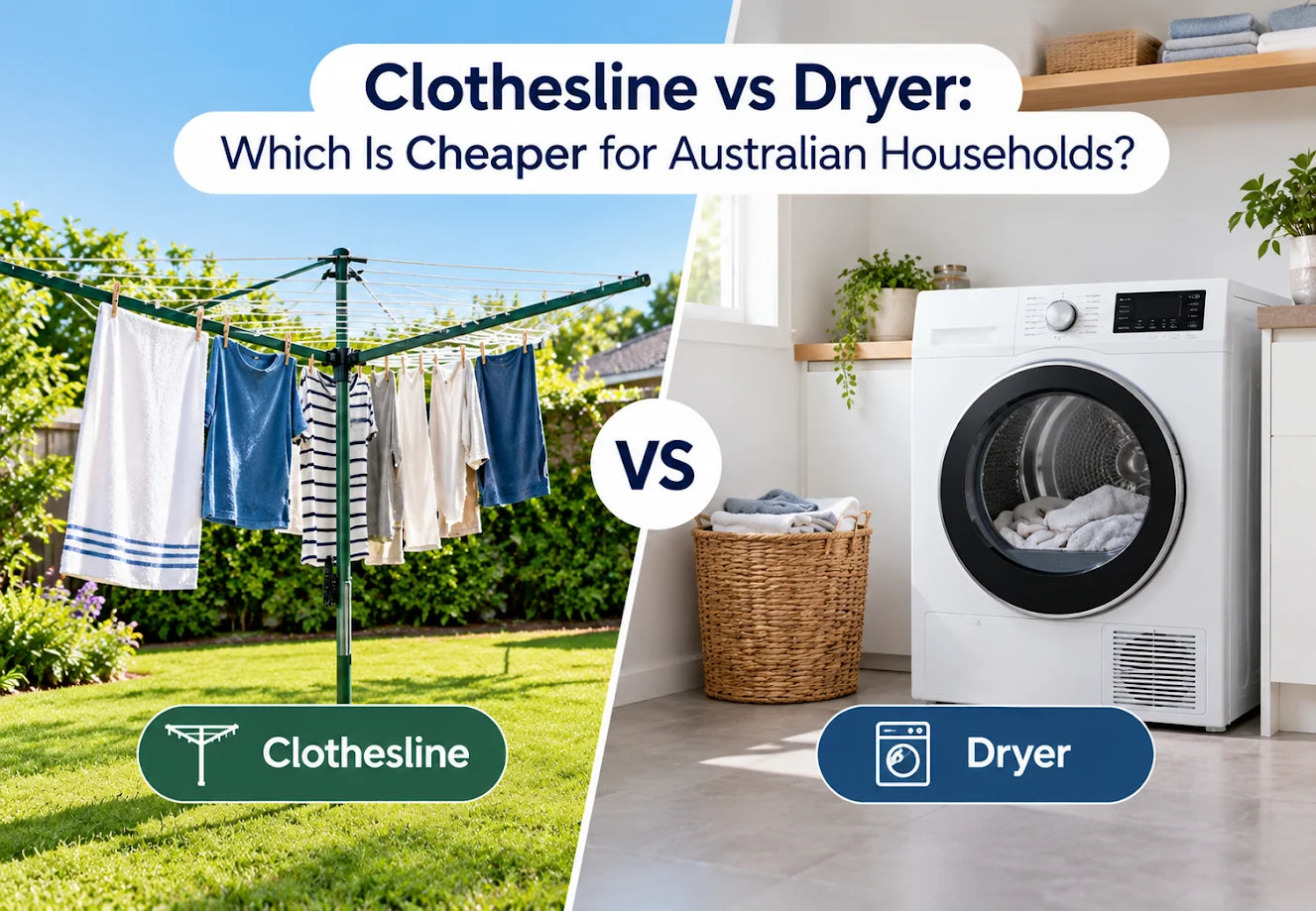
Every household has that never-ending pile of laundry. School uniform, work clothes, towels, bedsheets somehow keep filling the washing basket. But have you ever considered how much money you have just invested to get those clothes dry? Australia's household budgets are under strain as bills for electricity, gas and water are pushed to the limit, and even small changes to daily habits can have an impact. Start with your laundry!
When it comes to clothesline vs dryer, the main advantage of putting your laundry out on the clothesline is the fact that you won't be using electricity to dry them. In addition, with modern space-saving clotheslines, you don't have to have a large backyard to reap the rewards.
A dryer may speed up the drying process, but it comes at the expense of electricity usage. Those running costs can creep up over weeks, months and years. A clothesline is not the same. After installation or setup, it utilises fresh air and sunshine instead of electricity. This is what makes the clothes dryer vs clothesline comparison so interesting for those families who do more than a few loads a week.
Now let's compare the two drying methods:
|
Feature |
Clothesline |
Electric Dryer |
|
Electricity Consumption |
None |
Electricity is required |
|
Running Costs |
No electricity costs |
Cost per drying cycle |
|
Environmental Impact |
No direct operating emissions |
Depends on electricity source |
|
Fabric Care |
Avoids heat and mechanical tumbling |
Tumbling and heat may cause wear |
|
Maintenance |
Generally minimal |
Components and filter require care |
|
Space Requirements |
Compact options available |
Dedicated appliance space |
|
Long-Term Affordability |
Lower ongoing costs |
Ongoing energy expenses |
If you want to save money but don't want to give up your laundry needs, a clothesline can be a worthwhile long-term investment.
Consider how often you run the washing machine. Maybe it's three times per week, or even nearly every day when you have kids. Now think of having to charge for the drying of all those loads.
There are various factors that affect the cost of using dryer appliances, such as size, efficiency, electricity tariff, and electricity usage time. For instance, a standard dryer uses 3 kWh of electricity for every use and electricity costs 30 cents per kWh. It’s 90 cents per load or something. Assuming 5 loads of clothes are done a week, the approximate cost of electricity used is
Weekly: $4.50
Monthly: $19.50 approx.
Yearly: $234 approximately
(These are example calculations, not actual electricity costs from Australia). Actual costs will vary based on the appliance and energy plan. Now compare it with a clothesline, which does not need any electricity to dry the clothes. Those savings can pay for your everyday bills rather than being lost on yet another power bill.
You don't need to make huge changes to your lifestyle to save money. Sometimes, it begins with as simple an action as putting away the laundry. The magic of clothesline energy savings is that they are simple. Each load dried naturally is one less load requiring electricity-powered drying.
If families are struggling with rising laundry energy costs, a clothesline can make a big difference over time. There's no need to change an appliance setting, track electricity tariffs, or buy another energy-draining appliance. Just dry clothes in a suitable ventilated area, let them dry naturally and put them in the house when they are dry. It is an easy way to do energy-efficient drying in a way that is easily incorporated into regular Australian life.
It happens to all of us at one point or another: The perfect shirt that appears in the dryer all crumpled and shrunk. Not all clothes are affected, but some may be damaged by being tumbled for too long or at too high a temperature.
One of the greatest benefits of air drying clothes is that it doesn't have the mechanical action or heat effects as tumble drying. This can be particularly beneficial for:
Lace and other fragile fabrics that should be handled with care.
Activewear and clothing that contain elastic fibres.
Everyday cotton garments
Clothes and articles of clothing printed with designs.
Items that are not suitable for tumble dryers are marked with unsuitable for tumble dryer.
By following garment care labels and avoiding excessive direct sunlight on sensitive fabrics, line drying can help maintain your clothing's condition. This translates to reduced unnecessary wear and possibly reduced replacement purchases.
There are a large number of Australians who reside in apartments, townhouses and houses with limited outdoor space. Your balcony may be small, your courtyard may be narrow or your laundry space may be small. Fortunately, an electric dryer doesn't have to be your go to choice.
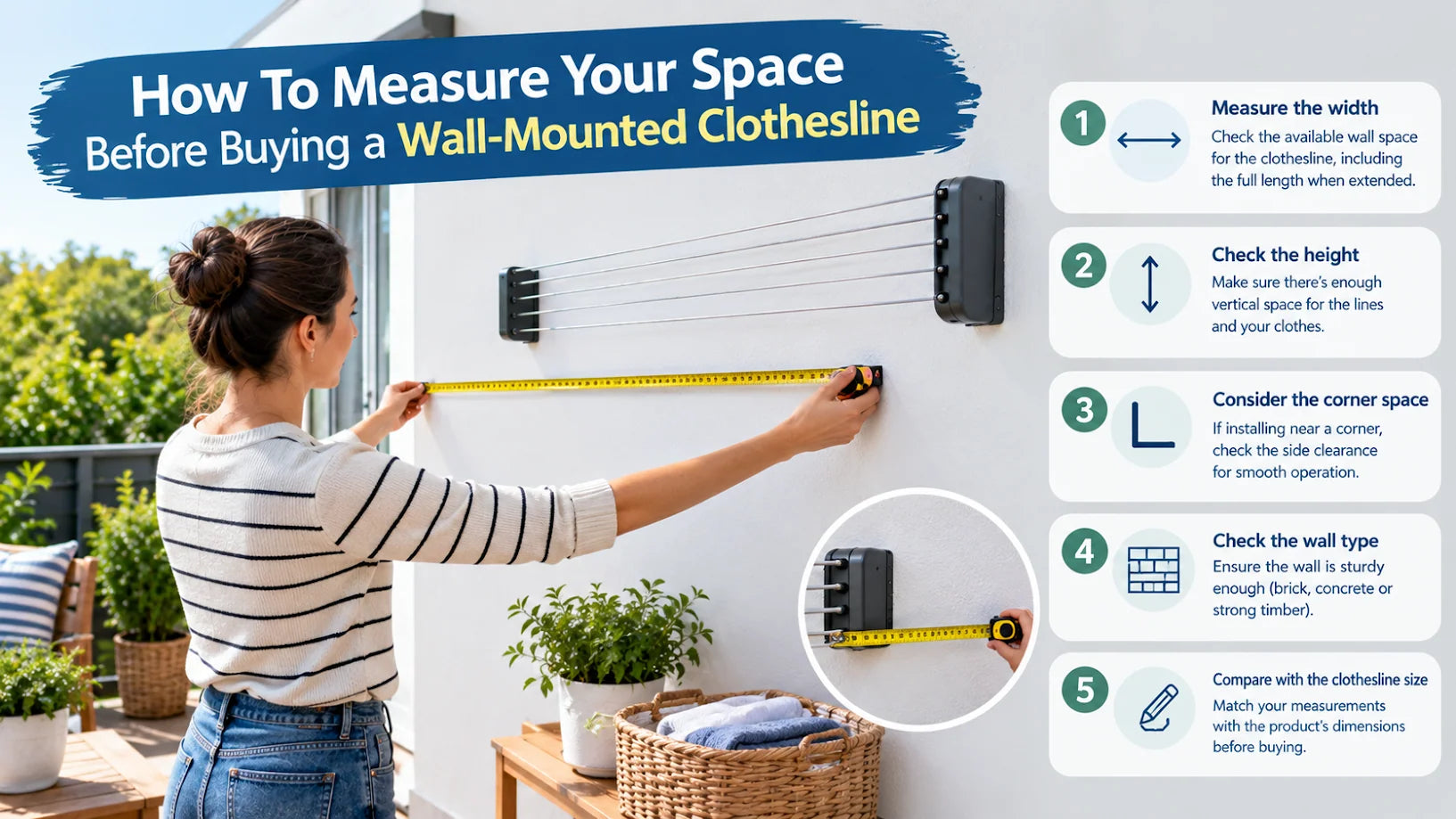
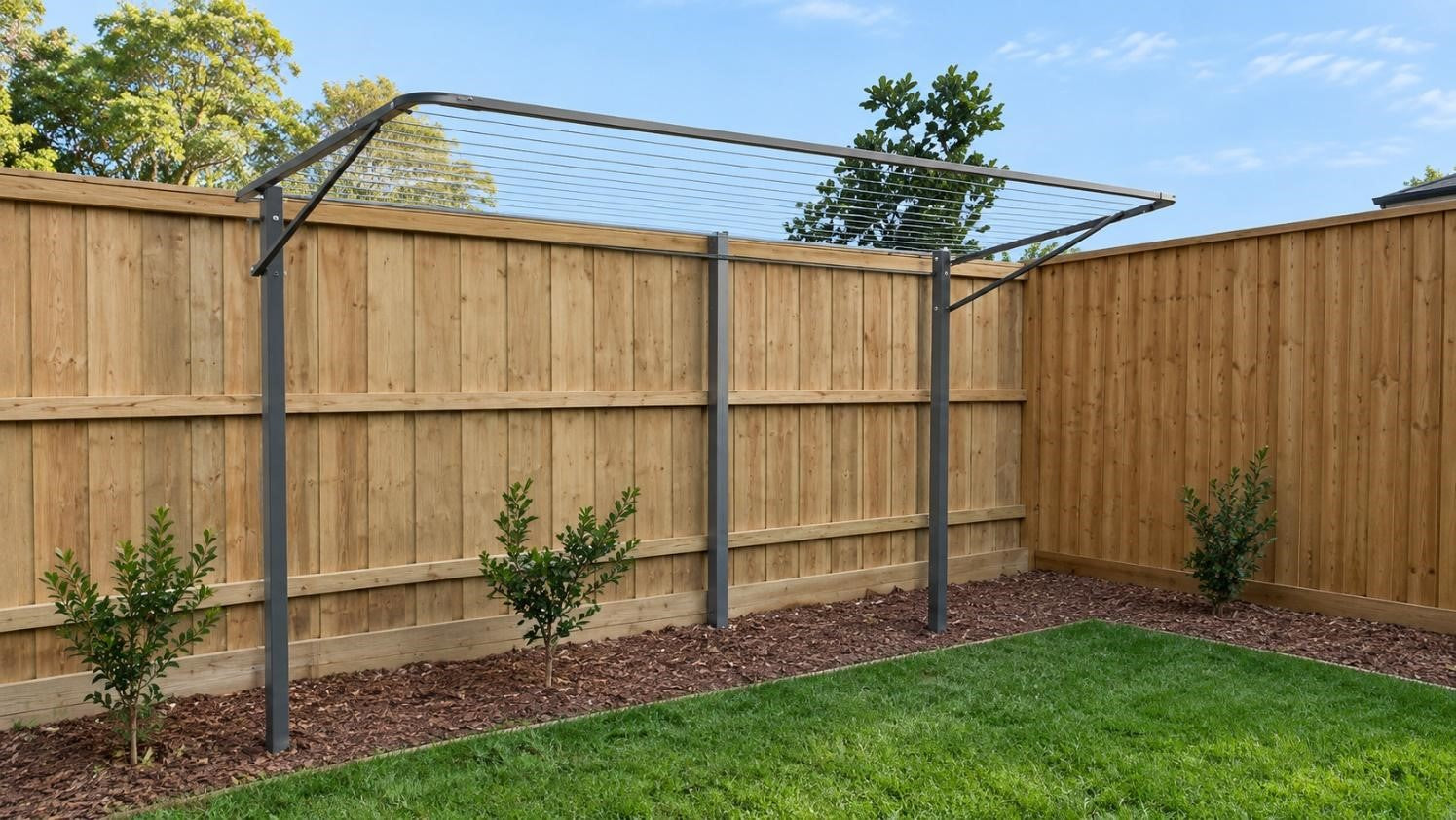
Today's clotheslines are made to reflect the lives of people. Balcony Clothesline offers hands-on solutions to help households use the space they have to dry clothes. An advantage of using portable clotheslines is the flexibility to place them in an appropriate drying location and fold them up or store them when not in use. Hanging clotheslines on the wall keeps floor space free and makes it easy to hang everyday wash. For those properties with outdoor space, another real solution is to use clotheslines that are fixed to the ground. With the right clothesline, you can let several items air-dry without requiring a big traditional clothesline. If drying indoors, ventilate to avoid excessive moisture in the house.
Consider how much energy is consumed every time a dryer runs. The choice of a clothesline eliminates the use of electricity in the drying process, which makes it an eco-friendly option. Clotheslines don’t need an electrical source to operate like electric dryers. They do their work with the sun and air currents that are there. This is a simple change for Australian households that want to live more sustainably and be kinder to the planet. And the best part? You are making a difference and saving money in your home.
If you're looking at clothesline vs dryer, a clothesline is the superior everyday choice for Australian households that want to save money, care for their clothes and use less energy. Clotheslines provide practical long-term benefits, require no electricity to run and can be used in a variety of settings from a large house to a small balcony. Why pay to dry wash when the sun and fresh air will do it? Looking to save money on laundry costs and maximise space? Visit Balcony Clothesline today for solutions to your clothesline needs that are practical, durable and space-saving. Find a clothesline that works for your home and enjoy a smarter, more economical way to wash and dry.